
BGA Testsockel
Making Ball Grid Array Sockets You Can Count On |
![]() |
Floating Nests |
![]() |
Lead Free Solder Balls
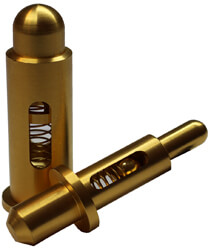
The move to lead-free products has put as much strain on the BGA market as any other type of device. Some of the major points of interest are adhesion challenges, TCE mismatch, and splintering. When testing a BGA device, no matter what the percentages are in the SnAgCu solderball, penetration is critical. We have optimized our Endura Series to address these new challenges.
The benefits are numerous:
- Plating is harder and more resistive to solder.
- Harder base material provides greater probe life due to less tip wear.
- The spring force can be increased by almost 30%.
- Reduced 4-point crown is available for smaller featured parts.
The Importance of Compliance
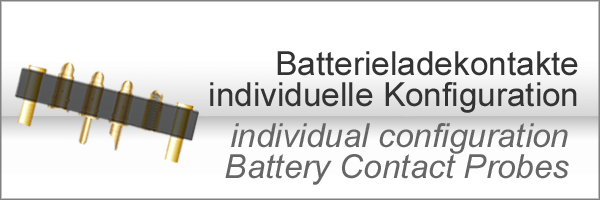
One of the primary responsibilities of any production test engineer is the initial tweaking of the test setup in order to make sure 5 to 10 separate components work together. The test socket is often the one component in that list that has the ability to maximize compliance without sacrificing performance. Without this compliance, minute variations in set-up or coplanarity can mean substandard pass rates. This idea is one of the primary driving forces behind our Compliance Plus Probe, the next generation of our chip scale probes. The Compliance Plus Probe marks the continual evolution of the ground-breaking Endura probe line. The increased travel, or compliance, offered in the Compliance Plus Probe has been very beneficial in the high speed, low margin of error world of BGA testing.